
Cloward Award Recipient
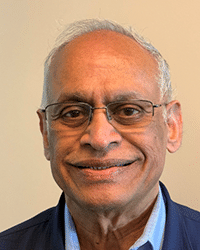
2026: Laligam Sekhar, MD, FACS
Vice Chair, University of Washington Neurological Surgery
Education & Training
Dr. Sekhar was born in Madras, India, now known as Chennai. He grew up in a small city in Tamil Nadu called Dharmapuri and studied in the government high school in Tamil medium. He completed pre-university education at Loyola College and pre-medical education at Vivekananda College, Madras. He decided to become a doctor at the insistence of his father, but it was not his first choice. He finished his medical education at Madras Medical College, University of Madras, in 1973, graduating at the top of the class and earning the Johnstone Gold Medal. He moved to the United States in 1974, where he did his neurosurgical residency at the University of Pittsburgh under Professor Peter Jannetta, followed by post-residency fellowships in Germany under Professor Majid Samii, and in Switzerland under Professor Gazi Yasargil. He earned his American Board of Neurological Surgery certification in 1981 (written; 100th percentile), and 1986 (oral; highest of all candidates taking the exam).
Academic & Clinical Career
Upon joining the faculty at the University of Pittsburgh in 1984, Dr. Sekhar focused his clinical work on cerebrovascular surgery and started developing new operative procedures. Working with the otolaryngology department, he established the first Center for Cranial Base Surgery in the United States, helping to define skull base surgery as a distinct surgical discipline in the late 1980s and 1990s. He innovated many operations in the field of skull base surgery to solve some difficult problems, working collaboratively with surgeons from other disciplines. In addition, over the next 20 years, he perfected brain bypass surgery for complex brain aneurysms. His surgical innovations span the areas of skull base surgery and cerebrovascular surgery. His recent innovations include macro-vascular decompression for disorders of cranial nerves and brainstem, decompression and bypasses of the vertebral artery at the upper cervical area, and decompression of the internal jugular vein at the outlet of the jugular foramen.
After leaving the University of Pittsburgh, Dr. Sekhar served as Professor and Chairman of Neurosurgery and Director of the Neurological Institute at George Washington University Medical Center in Washington, D.C. Since 2005, he has been the Director of Cerebrovascular and Skull Base Surgery at Harborview Medical Center, Seattle, Washington, Vice Chair of UW Neurological Surgery, and a Professor of Neurological Surgery and Radiology at the University of Washington. He works closely with the neurointerventional, cerebrovascular, and skull base surgery teams at Harborview Medical Center at the University of Washington.
Leadership & Scholarship
Dr. Sekhar has served as the President of the North American Skull Base Society, the World Federation of Skull Base Societies, and the Washington State Association of Neurological Surgeons, and has also served as an officer in other major neurosurgical organizations. He has received many awards including the Drake Lectureship, Professor Kalyanaraman Oration, Professor Ramamurthy Oration, and will receive the Cloward Award in 2026. He has been repeatedly recognized as one of the Top Doctors in the USA.
He has authored (or co-authored) 411 peer-reviewed papers, 10 books, and 210 book chapters. He has mentored more than 200 residents, fellows, and faculty across four academic institutions worldwide, and continues to mentor faculty, residents, students, and fellows. He holds 7 U.S. patents, awarded or in process.
Research Interests
Dr. Sekhar has been continuously involved in neurosurgical and engineering-related research projects, which have led to several research grants and publications. One novel device has been commercialized (“The Spiway“).